How To Run Facebook Ads For Creators & Influencers

How to run Facebook Ads for creators & influencers remains one of the most financially important topics for any modern digital brand or public figure aiming to build predictable revenue instead of relying on platform volatility. Karma Media has had to rebuild the ad accounts of countless folks whose content growth had stalled because their underlying systems just didn’t make commercial sense. And if you talk to a Canberra advertising agency, they’ll tell you the same thing: your organic reach might get awareness going, but a structured paid traffic strategy is what turns that awareness into a real revenue stream.
Meta’s ad ecosystem is designed to reward people who get the basics right – signal quality, campaign objective alignment, and funnel coherence. When your paid distribution strategy starts behaving like a revenue engine, rather than just a bunch of random posts, everything gets a lot more stable – engagement, acquisition, and long-term monetisation.
Why Paid Traffic Matters In Today’s Social Landscape

Let’s face it: organic reach is all over the place on every social media platform. Paid traffic eliminates that uncertainty by giving you reliable distribution, controlled message delivery, and a clear testing environment for your ad creatives.
Performance marketers know this – relying on organic branded content is not a strategy that’s ever going to cut it. Paid campaigns let you scale up influencer-generated content, dark posts, creator licenses and social proof without having to rely on algorithmic luck. And when they recommend paid amplification, a Canberra advertising agency will often say that’s the moment when a brand has validated its core message.
When run properly, Meta ads let brands and public figures keep their brand voice, control the customer journey, and evaluate performance metrics with real clarity – from cost per click to conversion lift.
How The Funnel Works (And Why It Impacts Profit)

You can’t afford to have a full funnel digital marketing strategy. Paid traffic only works when each stage supports the next. Too many accounts fail because the structure is all wrong – too much cold traffic spend, not enough nurturing and hardly any trust-building before retargeting.
The effectiveness of a funnel comes down to aligned ad objectives, branded content policies, and audience intent. Canberra advertising agency teams will often step back to diagnose funnel friction before adjusting targeting or spend, because the economics have to match the strategy.
Funnel Overview
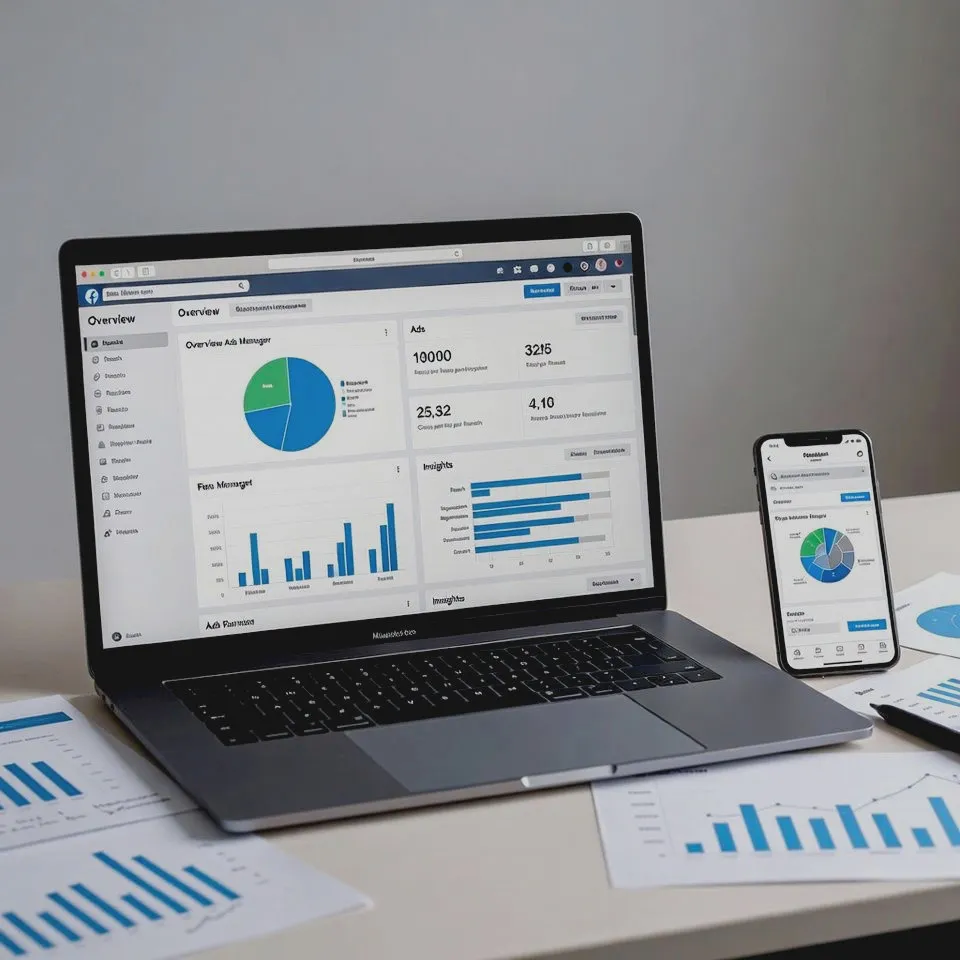
Awareness: get some scroll-stopping ad creatives and platform-native ad formats to attract new audiences.
Consideration: build trust through influencer partnerships, organic influencer posts, and educational ads.
Conversion: use some testimonial content, creator licenses and strong offers to get people to take action.
Retention: keep delivering value through email, community, repeat offers and consistent posting.
A funnel is not just a sequence – it’s a system designed to make you money.
A Proven Campaign Structure For Consistent Performance

Ad accounts go haywire when they get too cluttered. We use a high-signal structure at Karma Media that works with Meta’s learning system and gives you clean ad delivery – no mess, no hassle. Unlike some Canberra agencies, which seem to love adding extra layers, we know that simplicity always wins out in the end.
Campaign Layout
1. Awareness Campaign It’s all about video views or engagement – this phase gets your voice out there, introduces your value and builds some cheap visibility for you.
2. Lead Campaign Focusing on getting email or messaging leads. This step turns passive viewers into active participants, getting them ready for a conversion.
3. Sales Campaign This one’s all about conversions. We use trust-based ad formats, social proof and well-tested messaging here.
4. Evergreen Retargeting Campaign Here’s where we go after warm demand. We reinforce your authority, reduce friction and extract as much value as possible.
The whole system has to be consistent with Advertising policies, ad permissions and smooth ad delivery, or you can kiss goodbye to smooth ad delivery.
Creative Testing: The Force Multiplier Of Paid Growth
Your creative is the thing that determines everything else – your CPMs, click-through rates, cost per click and ultimately conversion. Brands that treat their creative as an ongoing product tend to outperform those who only use it as a one-off task.
Rather than spend months debating targeting, like some Canberra agencies are prone to do, we focus on getting creative variation, dark posting strategies and measurable performance gains because that’s where we get the fastest and most measurable performance gains.
Some of the key things we test include:
Hooks: These are designed to stop people scrolling and break the pattern of things they’re seeing.
Formats: We try out different formats, such as talking heads, B-roll with overlays, organic branded content, or licensed IG Stories, to see what delivers the best results.
Angles: Do we go for authority, pain points, lifestyle framing, or demonstrating something, or do we educate people on the value?
CTAs: Do we tell people to buy now, learn more, sign up or save for later?
Testing your creative ensures your message is always on point and matches the market, even as people’s tastes change.
Signal Quality: The Hidden Driver Of Meta Performance
Most ad accounts that are doing badly aren’t suffering from bad targeting – they’re suffering from corrupted signals. When you optimise for the wrong behaviours, Meta’s algorithm pushes your ads to the wrong people.
Signal quality problems often come from:
Campaigns that are built for engagement rather than for real outcomes
Ad formats that get used inconsistently with the type of thing you want to achieve
Poorly-structured branded content ads
Landing pages that break the customer journey flow, because they’re not properly set up
Ad code that isn’t implemented correctly
A weak organic presence that undermines your paid messaging
A Canberra advertising agency might focus on bidding or budgets. Still, at Karma Media, we focus on getting the signal right first – because the algorithm is only as good as the behaviour it’s being trained on. It’s that simple.
Budget Allocation For Sustainable Scaling

Scaling isn’t about throwing money at campaigns. It’s about maintaining increasing volume. Public figures and digital brands often misjudge this step, increasing budgets too fast and destroying profitability.
A more sustainable approach:
Start with modest spend across awareness and consideration
Increase spending only when results remain stable across several days
Allocate a consistent portion of the budget to evergreen retargeting
Let data determine when to scale horizontally (new creatives) or vertically (higher budgets)
A Canberra advertising agency might suggest aggressive vertical scaling, but Karma Media favours predictable, controlled increments.
Scaling Rules That Protect Margin And Maintain Efficiency
Scaling is about as much a science problem as it is a creative one – people often get it backwards. There are two key rules to keep in mind:
Scale up gradually – no more than 20-30% tweaks at a time
Add fresh creative variations before taking on new audiences
If you scale too quickly before people have a genuine feel for your brand voice or before creative fatigue sets in, that’s when your cost per click starts to skyrocket,t and conversion rates begin to tank. It’s essential to keep all your bases covered – organic branded content, influencer-generated content, and paid sequencing should all be in perfect sync.
Attribution: Understanding What Drives Revenue
Measuring the wrong performance metrics is a recipe for disaster. Likes, saves, and comments may be useful signals, but they are utterly useless as indicators of commercial success.
So what should you focus on?
Cost per click, of course
How well is your landing page performing?
Lead-to-sale conversion rates
Revenue generated within a 7-30 day window
Contribution margin
The impactthate paid campaigns have on conversion rates
Attribution models help cut through the noise and give you a clear idea of the impact your ads have across the entire customer journey. We at Karma Media often find ourselves having to rebuild reporting for brands that have got it wrong – a common problem we see even in the advertising agencies here in Canberra.
Strategic Closing Summary

Building profitable Meta campaigns for digital brands and public figures isn’t just about chasing the latest trends or hoping for a viral moment to come along. It’s all about structure, commercial clarity, disciplined testing and making sense of performance data.
When you get a system up and running that combines strong creative work, aligned objectives, clear signals and a stable funnel, paid traffic becomes predictability – and predictability is what underpins long-term profit.
Karma Media works with brands that want to scale, but do it right – not recklessly. Even an experienced Canberra advertising agency would tell you: performance is not about luck, it’s about discipline.
FAQ
Should creators be using dark posts or promoting their own organic influencer content?
Honestly, dark posts give you a bit more control. You can use them to test, refine and scale your ads without cluttering up your Instagram feed.
Do influencer partnerships help improve your paid ads?
Yeah, they can definitely help. When you pair them up with some decent creator licensing and branded content policies, they can create some genuinely high-performing ad creatives.
What is the ideal campaign objective for creators just startingthe?
For starters, Video Views at the top of the funnel is a good place to begin. Then, as your audiences warm up, you can shift over to Leads or Conversions.
How important is A/B split testing?
It’s absolutely critical – it helps identify which variations are doing best and reduces that annoying increase in cost per click as you get a better creative-market fit.
Do creators really need a full-funnel digital marketing strategy?
Absolutely – and we’re not the only ones who think so. Aligning your funnel improves campaign performance and helps prevent wasted spend – something that both Karma Media and just about any experienced Canberra advertising agency would would agree on.